
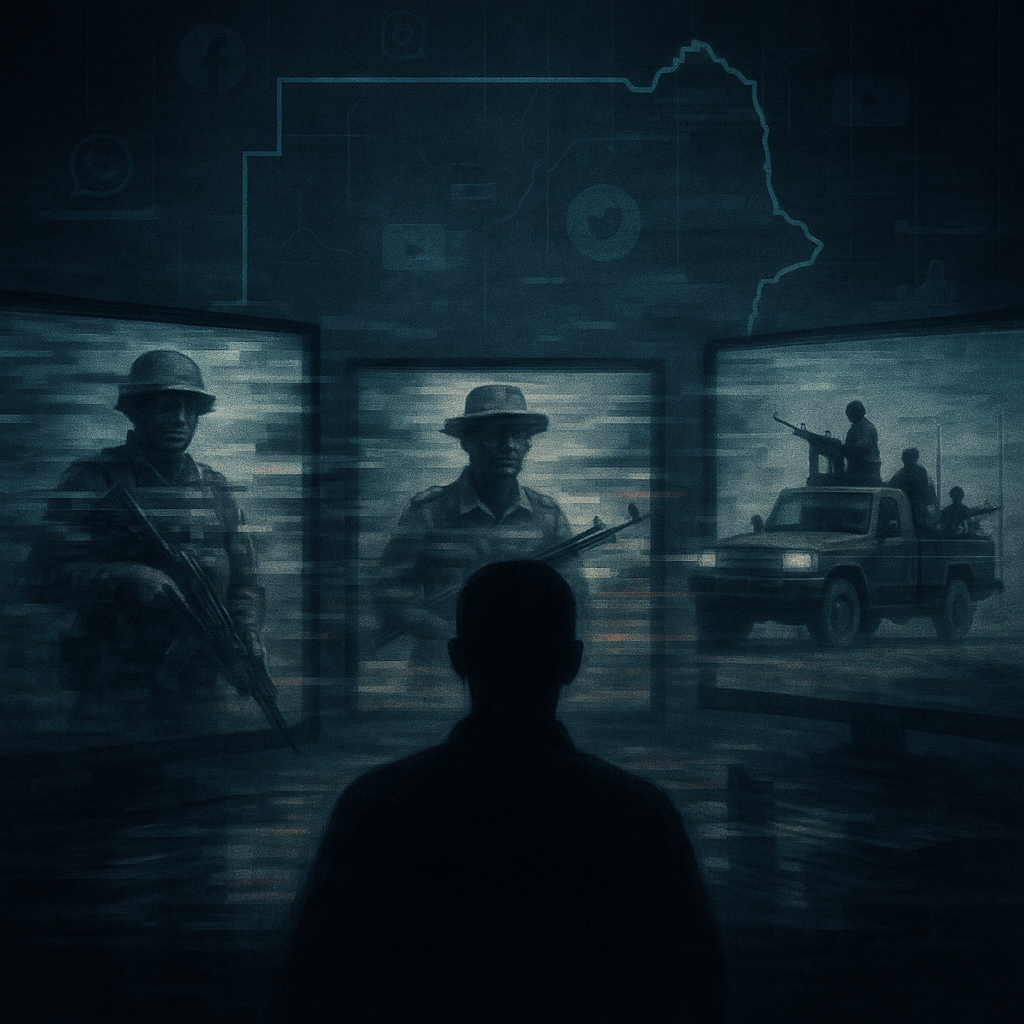

Sudan’s AI deepfake risk currently appears driven more by demand-side vulnerabilities than the volume of AI deepfake content. While AI-generated disinformation in Sudanese feeds remains limited, perceived (alleged) AI deepfakes and general AI skepticism worsen the situation and contribute to general uncertainty in multimedia content.
Within the analyzed cases, we found that the prominent stance was distrust driven more by motivated reasoning and contextual reliance than by durable AI detection skills. In practice rejection or acceptance to AI deepfake often reflects belief-driven judgement more than technical assessment.
These weak defenses leave the information environment vulnerable to future sophisticated AI deepfake campaigns and risk normalizing truth indifference. Short-term interventions should prioritize modality-agnostic demand-side interventions such as pre-bunking, AI literacy, scaled fact-checks, and tip lines that strengthen public resilience across all forms of disinformation. More technical AI-specific and supply-side interventions can be developed as institutional capacity and technology allow.



 English
  Arabic