
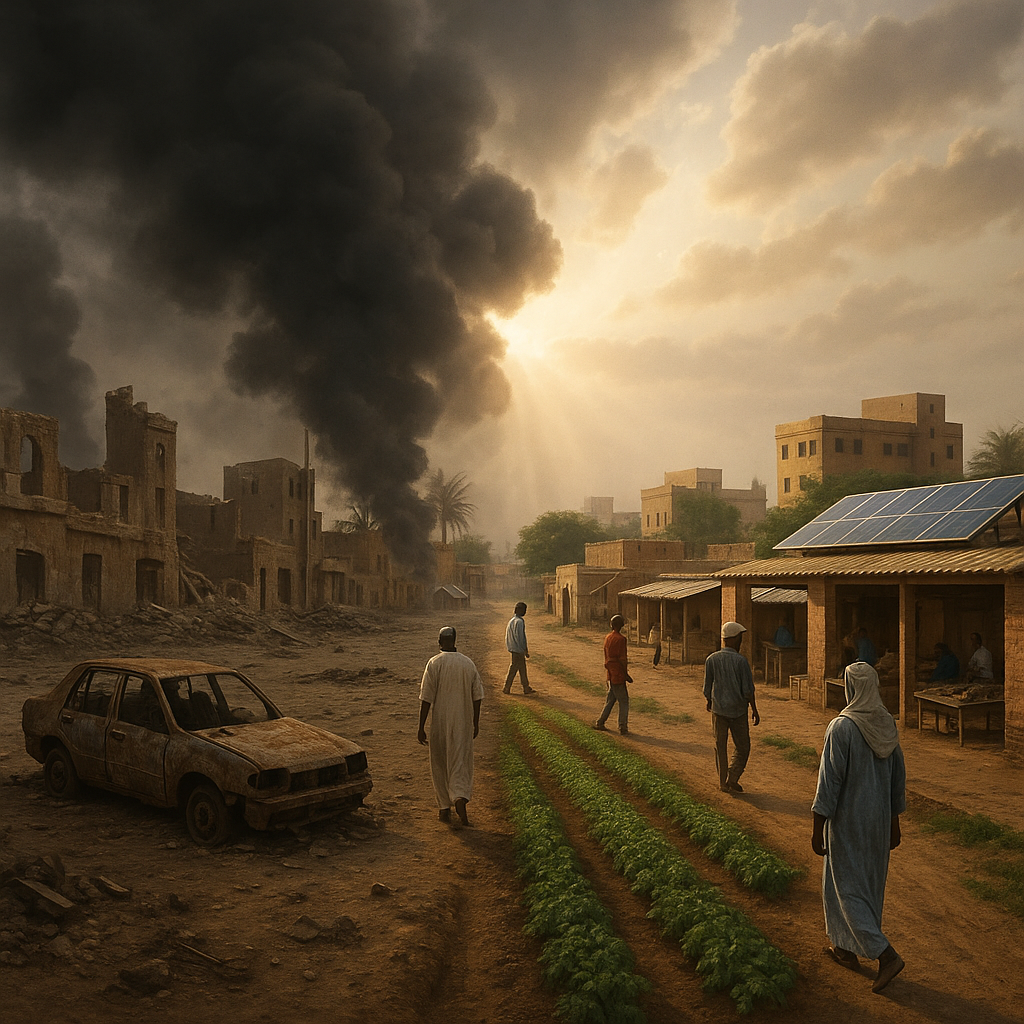

This study examines the potential role of civil society organizations (CSOs) in Sudan in supporting the peacebuilding process, through contributing to the transition from a war economy to a peace economy. The analysis stems from the theoretical framework of war economies, which identifies three main dimensions: the combat economy, the shadow economy, and the coping economy. The research focuses specifically on the latter dimension, as the coping economy is considered one of the economic forms most closely linked to the daily lives of conflict-affected communities. It highlights the survival and adaptation mechanisms developed by individuals and groups in the face of violence, displacement, and the collapse of state institutions. Through a comparative analysis of the war economy models of the Sudanese Armed Forces (SAF) and the Rapid Support Forces (RSF), the research demonstrates how each model imposes different patterns of economic and social pressures on civilians, and the consequent spaces and opportunities for civil society interventions. The research highlights that CSOs, both local and those operating in neighboring countries, are now operating within a complex environment characterized by state weakness, societal division, and networks of economic interests that fuel the war economy. The study shows that CSOs have the potential to contribute effectively to peacebuilding in Sudan by targeting the coping economy. Instead of treating the informal economic activities of civilians as mere responses to the crisis, they can be transformed into economic sustainability programs. To achieve this, the study recommends designing vocational training and qualification programs targeting the most affected groups, while facilitating access to microfinance, supporting the industrial sector, establishing local social and economic support networks, in addition to supporting agricultural production and local value chains, thereby contributing to supporting the formal economy and the peace economy.
Arabic Version:
English Version:

 English
  Arabic