
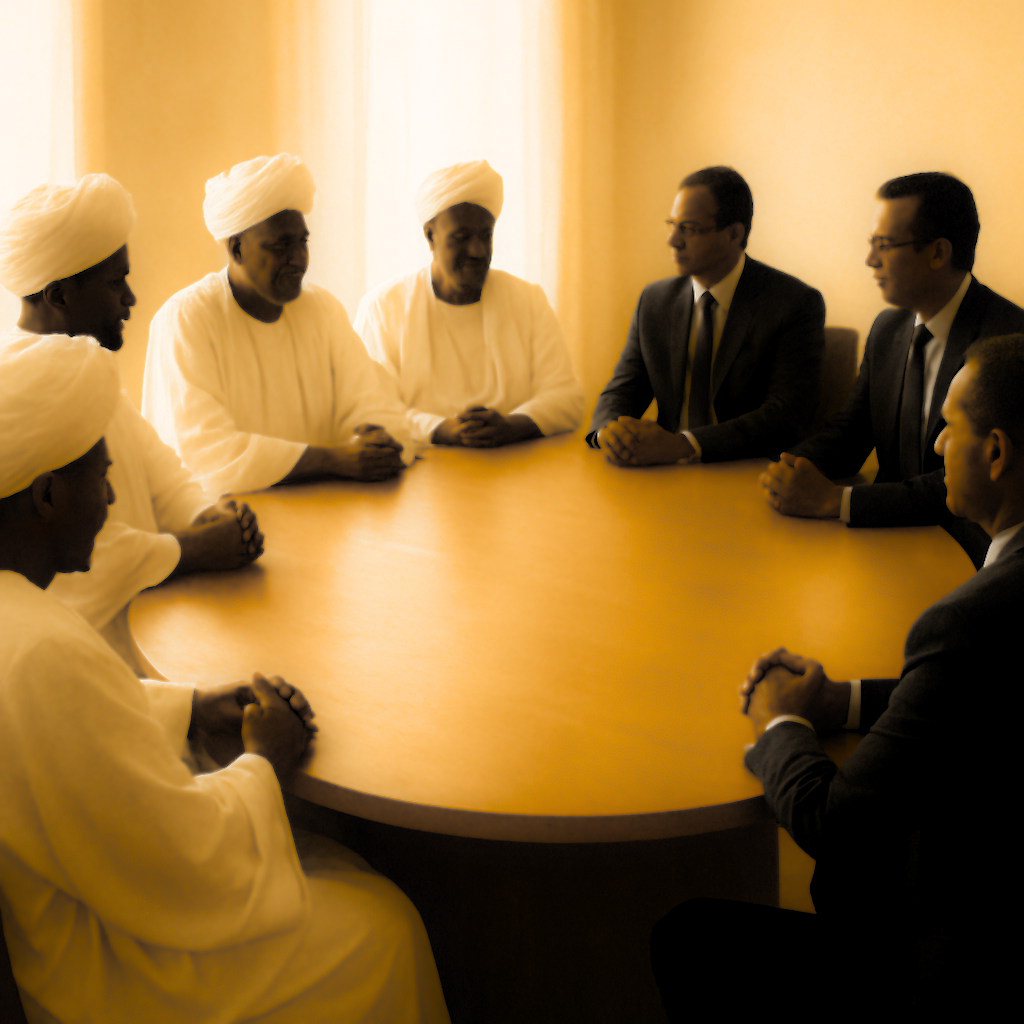

This paper is presented at a critical juncture in Sudan’s modern history, marked by an urgent need to rebuild state institutions and to redefine a more coherent and constructive relationship between the state and local communities. This necessity is particularly pronounced in regions facing complex and overlapping challenges, such as Eastern Sudan.
This paper examines the problematics of the relationship between traditional structures, represented by customary or native administration, and modern institutions, in the absence of a clear vision governing this relationship and defining its future trajectory. It focuses on native administration in Eastern Sudan as a case study.
The study demonstrates that previous policies failed to positively leverage these traditional structures. Instead, they contributed to deepening the problem through the political instrumentalization of native administration, which negatively affected its performance, stability, and capacity to represent the interests of local communities in Eastern Sudan. The paper does not merely call for partial reform; rather, it advocates for redefining the role of native administration within a hybrid governance approach that seeks to integrate traditional structures—rooted in deep community legitimacy—into state institutions and regulate their functions in a manner that reflects the nature and diversity of Sudanese society.
The paper is based on a qualitative analysis drawing on field interviews with native administration leaders and members of local communities in the eastern states, alongside a comparative analysis of experiences from African countries such as Botswana and Ghana, which have succeeded in developing integrated models that combine modern institutional frameworks with traditional legitimacy.
The paper concludes with a set of practical recommendations, most notably: enacting legislation to regulate the work of native administration and clearly define its mandates; establishing an advisory council within parliament that includes traditional leaders; and formally involving them in development processes through institutional mechanisms. It also calls for stronger coordination between state institutions and international organizations within development programs, and urges political parties to adhere to a code of conduct that prevents the political co-optation of traditional leaders in partisan conflicts.


 English
  Arabic