
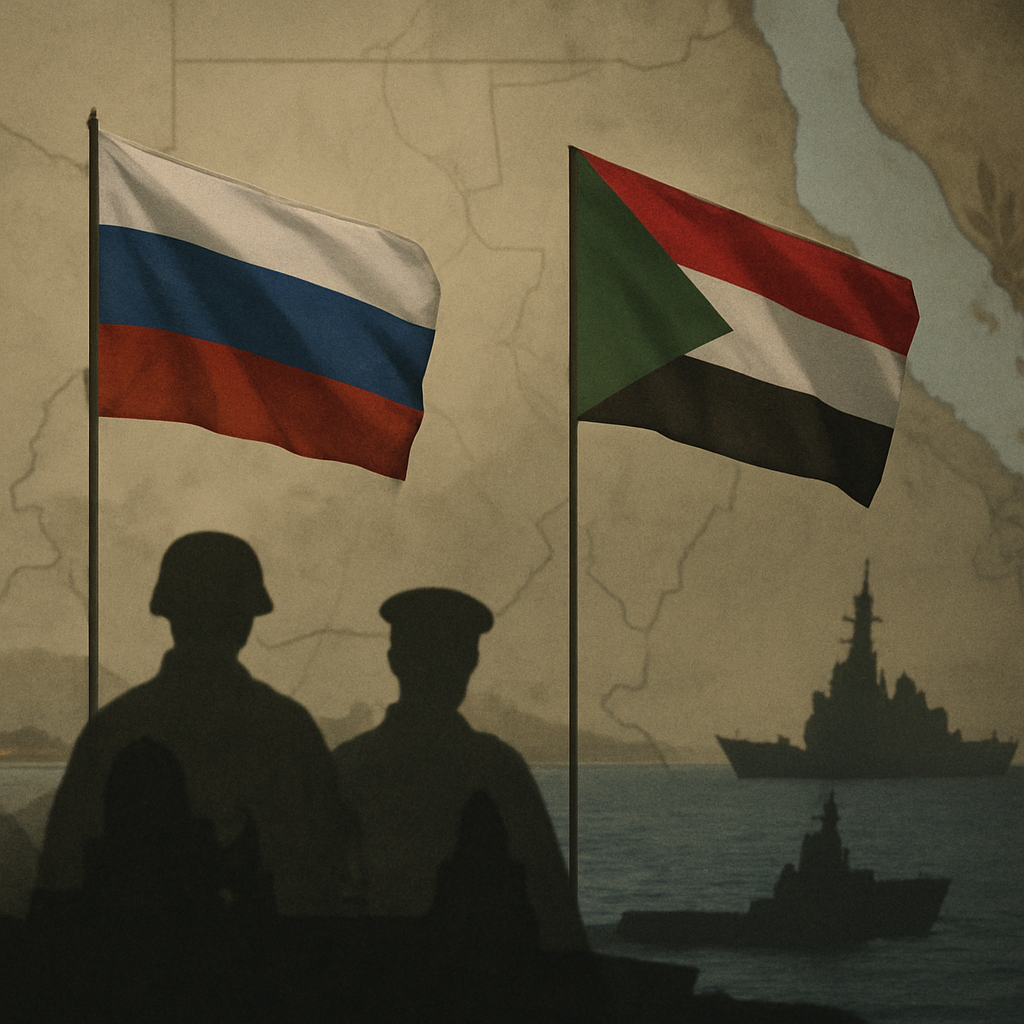

This paper provides an in-depth analysis of the potential impacts of establishing a Russian naval base in Port Sudan on Sudan’s prospects for peace and democratic transition. Amid a domestic conflict shaped by external dimensions and fragile democratic aspirations, the Russian presence represents a significant geopolitical development with far-reaching implications.
The analysis indicates that Russia is exploiting Sudan’s instability to expand its influence, providing military support that prolongs the conflict and undermines state-building efforts. Through a comparative examination of Russian interventions in Syria and Libya, a recurring pattern emerges: support for authoritarian regimes, resource exploitation, deepening of conflicts, and obstruction of governance. Although no final agreement regarding the base had been signed at the time of writing, these experiences raise serious concerns about Sudan’s future.
The paper recommends that the Sudanese government adopt a stance of constructive neutrality in its international relations and suspend the implementation of the Russian base agreement pending reassessment by a specialized national committee. Efforts should instead focus on ending the war, achieving reconciliation, and promoting investment and development opportunities rather than military concessions. It also urges political forces and civil society to organize awareness campaigns and peaceful advocacy against foreign interventions, strengthen international engagement, and support independent research and media to highlight the risks posed by foreign military bases.

 English
  Arabic