

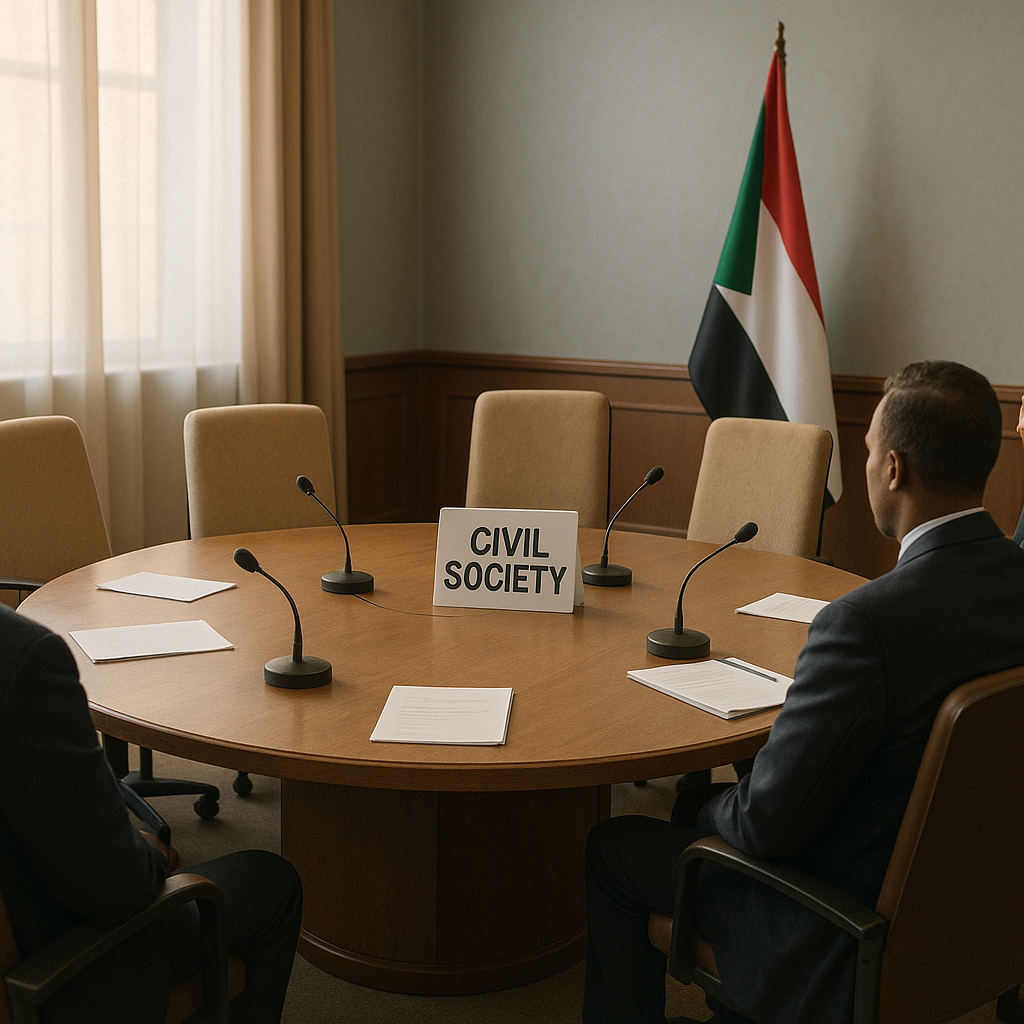
This paper moves from diagnosis to design of a criteria-driven mechanism for civil society representation in Sudan’s future peace negotiations. Now in its third year, the war has severely fractured the civic space, intensified political polarization, and undermined the capacity of grassroots actors, including women, youth, and local committees, to access and influence decision-making. While these groups are highly active on the ground, they lack a voice and leverage in formal peace talks due to the absence of clear, verifiable eligibility criteria, reasonable mandate processes, and explicit procedural rights. Historically, this gap has led to the dominance of organized political parties and armed movements, resulting in tokenism and the exclusion of genuine grassroots networks, which weakens the validity and sustainability of peace agreements. This research examines the structural and political obstacles restricting effective civil society representation. Drawing on normative international frameworks, comparative case studies from Tunisia, Yemen, and South Sudan, and primary data from semi-structured interviews with Sudanese civil society actors, negotiators, and policy experts, the paper moves beyond theoretical models to propose a context-specific solution. It identifies a profound crisis of leadership and legitimacy, deep political polarization, and significant capacity gaps as core challenges. The paper concludes by proposing a feasible, criteria-oriented process designed to enhance the legitimacy, diversity, and functionality of civil society representation. The proposed model is centered on the establishment of an independent national selection committee, the implementation of verifiable eligibility criteria based on tangible contributions, the guarantee of foundational procedural rights, and the creation of a transparent, neutral funding mechanism

 English
  Arabic